
WELCOME BONUS 200%
UP TO €1500 + 200
FREE SPINS
UP TO €1500 + 200
FREE SPINS
Home → Blackjack
Blackjack at Kingdom-Casino: Variants, Rules and Payouts
Shoe, Cut Card, and 75 Percent Penetration
A blackjack shoe typically contains multiple decks, and the depth to which the dealer penetrates the shoe impacts the house edge. For instance, using 6 decks instead of 8 can reduce the house edge by approximately 0.02 percentage points. The cut card placement determines the penetration point, directly influencing the game's fairness.
When the cut card is placed at the 75 percent penetration mark, it means a significant portion of the shoe's cards will be played before reshuffling. This penetration level is a key factor in games that are sensitive to card counting strategies. Some rule modifications, like Double After Split, offer a slight advantage to the player.
The specific rules of the game, such as whether the dealer hits or stands on a soft 17 (S17), also interact with penetration depth. For example, if the dealer hits soft 17, it worsens the RTP by 0.22 percentage points compared to standing. A higher penetration can slightly mitigate such rule disadvantages.
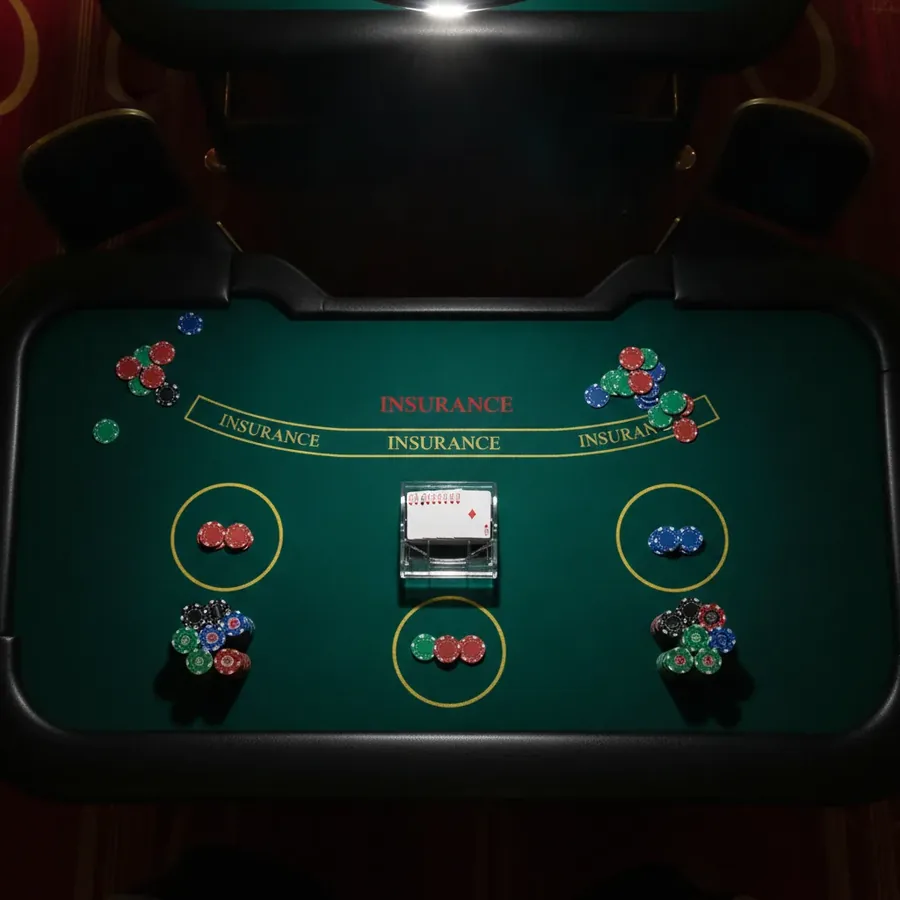
Chose Wrong Table for 5 EUR Bankroll
Selecting the correct table is crucial for managing a 5 EUR bankroll, especially when considering side bets which can deplete funds rapidly. For example, placing a side bet every round could limit a bankroll to approximately 30 rounds of play. Side bets, such as 'Any Pair' or '21+3' in Infinite Blackjack, often carry higher house edges.
The game's RTP and house edge are critical factors. A game with a 99.47% RTP, like Infinite Blackjack, offers a lower house edge than many side bets. If a player wagers 5 EUR on a side bet with a 7.47% house edge, that 5 EUR is expected to yield only 4.63 EUR over time.
When playing with a limited bankroll of 5 EUR, avoiding side bets is advisable. For instance, Blackjack Insurance, which pays 2:1, has an RTP of 92.53%, meaning a 5 EUR bet on insurance is expected to return only 4.63 EUR on average. This significantly reduces playtime.
When can you increase your bet?
For players employing card counting techniques, increasing bets is typically reserved for situations where the 'true count' is favorable. For example, Blackjack Insurance, while generally not recommended, becomes strategically viable for card counters when the true count is +3 or higher. This indicates a higher concentration of high cards remaining in the shoe.
The standard rules of most blackjack variants do not permit bet increases mid-hand or in response to previous outcomes, unless specifically allowed by game features. For example, a 300% welcome bonus up to €2,000 with 100 free spins does not alter the fundamental betting rules of the table.
In games with variable bet limits, such as Infinite Blackjack (€1 - €5,000), a player might increase their bet as their bankroll grows and if they are confident in their strategy. However, this must always be within the table's maximum bet constraints and is separate from the bonus wagering requirements, where table games contribute 10%.
When does the table max bet apply?
The table maximum bet applies to each individual hand played at the table, irrespective of any bonus wagering requirements. For example, on Infinite Blackjack, the maximum bet is €5,000 per hand, regardless of whether a player is utilizing a welcome bonus. This limit is enforced by the casino to manage risk.
This maximum bet limit is separate from the bonus structure. The 300% welcome bonus up to €2,000, for instance, dictates the total amount of bonus funds available and the wagering required, but not the per-hand stake at the table. Table games contribute 10% to wagering.
Different tables have different maximums; for example, Blackjack Party has a range from €1.00 to €1,000. Players must adhere to these limits for every wager placed. Exceeding the table maximum bet would not be permitted, even if the player's bankroll or bonus balance could accommodate it.
Side Bet Every Round: Budget Lasts 30 Rounds
Engaging in side bets on every round significantly reduces the longevity of a bankroll. For instance, a budget that might last hundreds of rounds when only playing the main hand could be depleted to just 30 rounds if a 5 EUR bet is placed on a side bet each time. Blackjack Insurance offers an RTP of 92.53%.
Consider a scenario with a 5 EUR bankroll. If each round involves a 5 EUR side bet, the budget is exhausted in a single round. However, if the 5 EUR is the total wager per round, including the main game, and a side bet is also 5 EUR, the budget is still limited. The RTP of Blackjack 6:5 is 98.15%.
To maximize playtime with a limited budget, it is advisable to forgo side bets. For example, the house edge on Blackjack Insurance is 7.47%, whereas standard blackjack rules like those in Blackjack 6 Decks, S17, DAS, DOA with a 3:2 payout have a house edge of 0.46%. This difference drastically impacts session length.
Blackjack variants at a glance
| Variant | Payout | House edge | Rule | Bet range |
|---|---|---|---|---|
| Blackjack 6 Decks, S17, DAS, DOA, Auszahlung 3:2, Basisstrategie | 99.54% | 0.46% | Dealer steht auf Soft 17; Verdopplung auf jeder Zweierkarte; Verdopplung nach Split erlaubt; keine Aufgabe. Basisstrategie ist für diesen Wert zwingend | Blackjack 3:2, normaler Gewinn 1:1, Insurance 2:1 |
| Blackjack Insurance / Versicherung (6–8 Decks) | 92.53% | 7.47% | Separate Nebenwette bis 50% der Hauptwette, wenn der Dealer ein Ass hat. Basisstrategie schreibt IMMER Ablehnung vor (außer Karten zählen bei True Count ≥ +3). Bei einem Deck Vorteil ≈ 5.88% | Insurance 2:1 |
| Blackjack Auszahlung 6:5 statt 3:2 (6 Decks) | 98.15% | 1.85% | Ersatz von 3:2 durch 6:5 fügt exakt +1.39 Prozentpunkte zum Vorteil des Casinos hinzu – stärker als jede andere Regeländerung. Bei $10 Einsatz zahlt Blackjack $12 statt $15. | Blackjack 6:5, Gewinn 1:1 |
| Blackjack Ein Deck, klassische Regeln, 3:2 | 99.85% | 0.15% | Weniger Decks = niedrigerer Vorteil; ein Deck gibt ca. −0.48 Prozentpunkte gegenüber 8 Decks. Oft durch 6:5 Auszahlung kompensiert. | Blackjack 3:2, Gewinn 1:1 |
| Blackjack Surrender (Late Surrender) – Regel-Effekt | n.a. (Regel-Modifikator) | −0.08 Prozentpunkte | Spieler gibt Hand nach Dealer-Blackjack-Prüfung auf, verliert die Hälfte des Einsatzes. Verbessert RTP um ca. 0.08 Prozentpunkte. Early Surrender ist wesentlich wertvoller (bis −0.6 Prozentpunkte), aber extrem selten. | Rückzahlung 50% des Einsatzes |
| Blackjack Liberal Vegas Strip (liberale Regeln, 3:2) | 99.72% | 0.28% | Günstigste Regelkombination: S17 + DAS + Resplit + Late Surrender. Standardabweichung 1,15 | Blackjack 3:2, Gewinn 1:1 |
Statistics display saves the last 100 rounds
The statistics display shows the outcomes of the last 100 rounds played on tables such as Infinite Blackjack, offering a snapshot of recent game activity. Each round in Infinite Blackjack has a theoretical RTP of 99.47%, allowing players to observe trends in this popular variant. This feature provides a context for understanding the distribution of outcomes over a defined period.
For comparison, Blackjack 6 Decks, S17, DAS, DOA, with a 3:2 payout and played with basic strategy, has an RTP of 99.54%. Observing the last 100 rounds on different blackjack variants can illustrate the minor fluctuations in performance that occur, even with high RTP games.
Players can analyze this data to get a feel for the game's behaviour, although it's important to remember that each round's outcome is independent. The house edge on Blackjack Insurance, for instance, is 7.47%, which is significantly higher than the main game's edge.
Bonus conditions often exclude Blackjack completely
When considering bonuses, it is crucial to examine the terms and conditions, as many exclude table games like Blackjack. For example, slots contribute 100% to bonus wagering requirements, while table games typically contribute only 10%. This means that playing Blackjack, even with its favourable RTPs, does not effectively clear bonus wagering.
The welcome bonus of 300% up to €2,000 plus 100 free spins is a significant offer, but its applicability to Blackjack can be limited. A €100 bonus, requiring a 10% credit from Blackjack, would necessitate €4,000 in turnover if only €100 was wagered on slots, but much more if only Blackjack contributed.
Blackjack Liberal Vegas Strip, with an RTP of 99.72%, offers a low house edge but may not aid in meeting bonus obligations. Players must ensure that their preferred games contribute sufficiently to wagering before accepting bonus offers to avoid disappointment.
How much time is left for the decision?
Decisions at the Blackjack tables, particularly in live dealer games like Infinite Blackjack, need to be made within a set timeframe. While specific timers can vary between tables and providers, a typical duration for placing bets and making decisions is often around 15 to 20 seconds. This pace is designed to keep the game flowing smoothly for all players.
In contrast, a game like Blackjack 6 Decks, S17, DAS, DOA, played in a non-live format, offers players ample time to consult strategy charts and make their choices. The absence of a live dealer's clock removes time pressure, allowing for more deliberate gameplay decisions.
The speed of live games such as Lightning Blackjack, which can feature multipliers up to 25x, necessitates quick thinking. Players who prefer a more leisurely pace might find the rapid decisions required in some live variants less appealing compared to other Blackjack options.
Bonus 100 EUR with 10 percent credit
A bonus of €100, with a 10% credit from Blackjack, means that only €10 of each €100 wagered on the game contributes towards clearing the bonus. This is in stark contrast to slots, where 100% of the wager typically counts towards the wagering requirements.
For example, if a bonus requires wagering 40 times the bonus amount, a €100 bonus would need €4,000 in turnover. If Blackjack only contributes 10%, a player would need to wager €40,000 on Blackjack to meet the €4,000 wagering target. This is significantly higher than wagering €4,000 directly on slots.
Blackjack Insurance, which has a house edge of 7.47%, is unlikely to be a beneficial strategy for bonus clearing due to its high cost. Players seeking to fulfil bonus conditions efficiently are usually advised to focus on games with higher contribution rates.
Six Decks to Eight Decks in the Shoe
The number of decks used in a blackjack shoe directly impacts the house edge, with fewer decks generally favouring the player. For instance, Blackjack Insurance with 6-8 decks has a house edge of 7.47%, whereas a single-deck game can reduce this advantage significantly.
A comparison reveals that Blackjack Ein Deck, classic rules, 3:2 offers an RTP of 99.85% and a house advantage of just 0.15%. This is a substantial improvement over games using more decks, where the house edge can increase due to factors like card removal probabilities.
The difference between using six decks and eight decks is minimal, around 0.02 percentage points in favour of fewer decks. However, this is often offset by other rule variations, such as a 6:5 payout for Blackjack instead of 3:2, which increases the house edge by 1.39 percentage points.
Highroller from 500 EUR per hand
Infinite Blackjack from Evolution allows stakes of up to 5,000 EUR per hand, significantly exceeding the 1,000 EUR limit found on Blackjack Party. This high limit caters to players seeking larger wagers. The game also offers four distinct side bets for varied gameplay.
Blackjack Lightning, also by Evolution, accommodates bets up to 2,500 EUR, placing it between Infinite Blackjack and Blackjack Party in terms of maximum stake. This table features multipliers of up to 25x on winning hands. Players can enjoy unlimited seating at this variant.
The Blackjack Party table has a maximum bet of 1,000 EUR, which is considerably lower than the 5,000 EUR maximum available on Infinite Blackjack. This variance in betting limits ensures a range of options for different player preferences. The house edge can fluctuate based on specific rules and player strategy.
One Deck vs Eight Decks in House Edge
A single deck blackjack game with classic rules and a 3:2 payout offers a house edge of just 0.15%. This is substantially lower than the 0.46% house edge found in a 6-deck game with S17 and DAS rules. Reducing the number of decks demonstrably benefits the player.
A 6-deck game with S17, DAS, and a 3:2 payout presents a house edge of 0.46%. This is higher than the 0.15% edge of a single-deck game, illustrating the impact of deck count on casino advantage. The basis strategy is mandatory for achieving this edge.
The difference in house edge between one deck and eight decks can be as much as 0.48 percentage points in favor of the player. While one-deck games are often compensated with less favorable 6:5 payouts, this comparison highlights the theoretical advantage of fewer decks.
Blackjack Party runs with two hosts
Blackjack Party by Evolution distinguishes itself by featuring two hosts, creating a lively atmosphere distinct from other blackjack variants. While Infinite Blackjack and Lightning Blackjack also offer unlimited player capacity, they do not specify multiple hosts. This dual-host setup aims to enhance player engagement.
The Blackjack Party table is designed for an entertaining ambiance, with its two hosts contributing to the 'party' theme. This differs from the more straightforward presentation of Infinite Blackjack, where the focus is on unlimited seating and side bets. The betting range is from 1.00 EUR to 1,000 EUR.
While Infinite Blackjack and Lightning Blackjack from Evolution offer unlimited player spots, Blackjack Party explicitly highlights its entertainment factor through the presence of two hosts. This unique feature aims to provide a more social and engaging gaming session. The RTP for Infinite Blackjack is 99.47%.
What Push Means: Stake Returns to You
A 'Push' in blackjack signifies a tie between the player's hand and the dealer's hand, resulting in the player's stake being returned. This outcome does not result in a win or a loss for the player's initial bet. Side bets, such as those in Infinite Blackjack, are not affected by a push on the main hand.
In Blackjack Liberal Vegas Strip, a push means the initial bet is refunded. The RTP for this variant is 99.72%, with a house edge of 0.28%. This game allows for liberal rules such as S17, DAS, Resplit, and Late Surrender, all contributing to a favourable player outcome in non-push scenarios.
The concept of a push is crucial for understanding basic blackjack outcomes. Unlike a loss where the stake is forfeited, a push ensures the bet is returned to the player. For example, in Blackjack 6 Decks with S17 and DAS, a push means the 100 EUR bet is returned unchanged.
Four hours of play with 300 EUR bankroll
A 300 EUR bankroll, if betting 10 EUR per hand, allows for approximately 30 hands before depletion, assuming no wins. At a rate of one hand per minute, this equates to about 30 minutes of play. This is significantly less than the four hours mentioned, highlighting the impact of bet size.
To play for four hours with a 300 EUR bankroll, assuming a constant bet and no wins, the average bet per hand would need to be considerably lower than 10 EUR. If a player bets 0.50 EUR per hand, and plays one hand per minute, 300 EUR would last 300 minutes, or five hours.
The welcome bonus of 300% up to 2,000 EUR plus 100 free spins could extend playtime, but table game contributions are only 10% towards wagering. For instance, to clear a bonus, 2,000 EUR in wagers are needed for every 200 EUR wagered on slots. This means table game play is less effective for bonus clearance.
Contact
Live - online chat
Banking









Providers












Casino Kingdom 2024